
Logical fallacy
Middle-ground fallacy
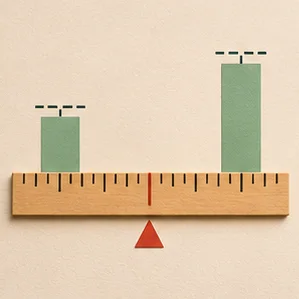
The argument treats the midpoint or compromise between two positions as true simply because it lies between them. One position, or a third option outside the compromise, may have better evidence.
Examples
One observer thinks the wall is four meters tall, another says fourteen. Without measuring, the right answer must be nine.
One report estimates no leakage and another says the tank lost half its volume. Let us call it one quarter simply because both sides disagree.