
Deduction and scope

Ad hoc rescue
Adds an unsupported auxiliary claim or exception to save a position from contrary evidence.
172 entries
Explore logical fallacies and cognitive biases. Search by name, alias, or a term from the definition.
172 results
Adds an unsupported auxiliary claim or exception to save a position from contrary evidence.
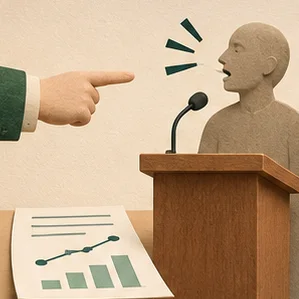
Uses a personal attack as a reason to dismiss a person’s claim or argument when the personal criticism does not bear on its merits or the reliance on...

A categorical syllogism tries to establish that two classes overlap or that one contains the other, although one premise excludes a class or part of a...

From P or Q and the truth of P, the argument concludes that Q is false. The conclusion requires an exclusive disjunction, while the premise permits bo...

If P is true, Q follows. Q is observed, so the argument concludes that P is true. Q may follow from other causes or conditions, so observing Q does no...

An ambiguous grammatical structure permits two readings, and the inference silently selects the reading it needs. The ambiguity comes from how the sen...

Lets an initial figure or reference point pull a later estimate toward it, even when independent evidence gives little reason to start there.

Treats an isolated personal account as decisive evidence about a general or comparative claim despite better evidence being needed.

Infers that a nonhuman system has a specific human belief, motive, or intention from a superficial similarity without evidence that the attribution ex...

Uses the audience’s indignation as the substantive reason to accept a conclusion the grounds do not establish. Anger can draw attention to an issue, w...

The speaker attributes a claim to unnamed experts or vague sources whose qualifications, evidence, and actual statements cannot be checked. The attrib...

A factual claim is accepted or rejected because its being true would produce welcome or unwelcome implications. The desirability of those implications...

The argument uses frightening images or outcomes to secure agreement without showing that the feared events are sufficiently plausible or connected to...

The speaker praises the audience’s intelligence, decency, or taste to induce agreement, implying that dissent would forfeit the compliment. The praise...

The speaker threatens a penalty for disagreement and treats pressure to comply as a reason the disputed claim is true or justified. The threat changes...

Treats allegiance to a group, cause, or person as sufficient grounds for a factual claim, or treats questioning the claim as proof of disloyalty in pl...

The argument treats something as good, safe, or morally right because it is natural, or as bad because it is artificial. Its origin alone does not est...

The argument turns a statistical or social norm into a standard of what is healthy, permissible, or desirable without a supporting reason. Unusual cas...

A newer belief, method, or product is assumed to be better or more accurate simply because it is recent. Its performance or evidence needs independent...

Uses compassion as evidence for a conclusion for which that compassion is an irrelevant warrant.

A belief is declared true, good, or justified because many people share it. Widespread acceptance establishes what people believe without settling the...

A speaker’s lack of wealth is treated as proof of moral purity, credibility, or correctness on the matter under discussion. Financial position alone c...

An event’s possibility or nonzero chance is treated as enough to conclude that it will occur. A possible outcome still requires evidence about its lik...

An argument or conclusion is presented as worthy of mockery, and the mockery is offered as a reason to dismiss it. Humor or embarrassment does not dem...
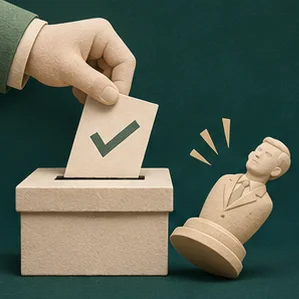
The speaker relies on resentment or a desire to punish a disliked party to win acceptance for a claim or proposal whose merits have not been establish...

Presents the bare dismissal of a claim as absurd as if that dismissal answered the evidence for it. The passage supplies neither a contradiction in th...

A belief or practice is defended as correct, superior, or obligatory simply because it has been inherited or maintained for a long time. Longevity alo...

Relies on an endorsement whose source lacks relevant expertise, adequate access, independence, or suitable grounds to carry the stated conclusion.

A claim is accepted because its proponent is wealthy or because success is assumed to certify unrelated judgment. Wealth itself does not establish exp...

Treats missing proof of a claim as sufficient proof of its negation, or missing disproof as sufficient proof of the claim.

The speaker dismisses a claim because they cannot imagine how it could be true, or treats a preferred explanation as proven because alternatives are d...

Draws too much from the absence of an expected statement, record, or response.

Treats observations or reports as independent corroboration even though they share a source, dependence, or common error that explains their agreement...

A pattern seen between individuals is assumed to hold between groups or populations. Group-level processes and aggregation can change or even reverse...

Estimates how frequent or likely something is by how readily examples come to mind. Vivid or widely reported cases can be easy to recall even when the...
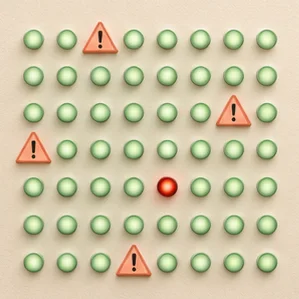
Disregards the relevant prior frequency of a condition when using case-specific evidence to estimate how likely the condition is.

Uses a sample chosen in a way that systematically distorts what it shows about the target population.

Uses technical vocabulary or a scientific-looking presentation as evidence by itself. The conclusion depends on the appearance of a method or result t...

The argument assigns a property or operation to something of the wrong logical kind. For example, it looks for a university as one more building along...

Selects favorable findings, cases, periods, or measures while omitting relevant unfavorable evidence, then draws a conclusion the selective subset can...

A definition explains a term using that same term or another term that ultimately depends on it. A reader who does not already know what the term mean...

Presents a premise or chain of supporting claims that already assumes the disputed conclusion in substance.

Treats a speaker’s circumstances, affiliation, bias, or stake as by itself sufficient to reject their claim or reasoning.

Leaves it unclear whether a claim covers some, most, or all of a class, then relies on a stronger reading to reach a conclusion. Ordinary shorthand be...

Favors information that supports an existing belief by searching for it, interpreting ambiguity in its favor, or scrutinizing contrary evidence more h...

The argument assumes that showing why someone acted as they did establishes that the action was morally or rationally justified. A causal explanation...

Treats the ratio of successes to failures as the fraction of all outcomes that are successes, or substitutes a ratio of odds for a ratio of probabilit...

Uses a change relative to baseline risk as if it were an equally large change in absolute probability or percentage points.

A detailed scenario where two events both occur is treated as more probable than one of those events alone. The overlap cannot be larger than either c...

Because there is no precise, non-arbitrary cutoff between cases, the argument denies that cases at opposite ends can meaningfully differ. Borderline c...

Uses premises that cannot all be true in the same sense, place, and time. With no possible case where the premises jointly hold, the argument cannot e...

Two phenomena occur together or vary together, so one is said to cause the other. The pattern alone leaves open coincidence, reverse causation, and ot...

Defends an earlier claim by switching to a narrower or different meaning of a key term after objections arise, then presents the defended reading as i...

Counts are compared without accounting for the different-sized populations, time periods, or opportunities from which they were drawn. More events can...

From the fact that two propositions cannot both be true and that one is false, concludes that the other must be true. Both may be false.

If P is true, Q follows. P is false, so the argument concludes that Q is false. P may be sufficient for Q without being necessary, and Q can arise ano...

Portrays a penalty someone has the power to choose or change as an unavoidable effect of another person’s act. The description is used to avoid defend...
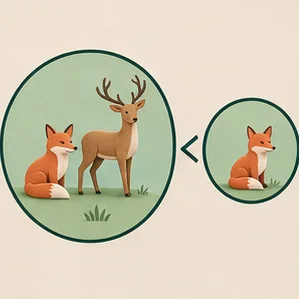
Ranks a disjunction of events as less probable than one of the events it includes, even though any outcome satisfying that event satisfies the disjunc...

Treats a role’s most obvious task as its entire contribution. It predicts that replacing that task will preserve the value of the whole role without c...
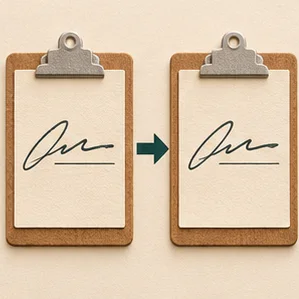
Several observations are treated as independent confirmations even though they trace to the same source, copy one another, or count the same event mor...

A statistical relationship or average observed for groups is used to infer how the same variables relate for individuals in those groups. Aggregate da...

Shifts the meaning of a repeated term or phrase at a point where the inference depends on keeping its meaning fixed.

The earlier roots or historical usage of a term are presented as decisive evidence about its current meaning. Usage can change and can differ across s...

Takes a genuine counterexample to an unconditional rule as confirmation of that very rule. A stated exception can reveal an ordinary restriction, but...

The argument infers that an instance of a category exists from a universal statement that can hold even if the category is empty. All unicorns have ho...

An argument for a claim contains an error, so the speaker concludes that the claim itself must be false. The claim may still hold for independent reas...

Shifting verbal emphasis or selectively quoting part of a statement changes the meaning conveyed, and the argument relies on that altered meaning.

A generally reasonable rule is applied mechanically to an exceptional case where the rule’s purpose or ordinary qualifications make it inapplicable. T...

A property of each part is assumed to belong to the whole. Every item can be lightweight individually while the collection of all the items is heavy....

A property of an entire group is attributed to each of its members. For example, a team can be wealthy in aggregate without every player being wealthy...

A categorical syllogism tries to derive a relationship between two classes from two negative premises. Knowing that each class is excluded from a thir...

Assumes that meeting the largest possible number of requirements for a best outcome will automatically produce the next-best outcome when an important...

A categorical syllogism needs three distinct terms but uses four, often because its apparent connecting term changes meaning between premises. The pre...

The argument dismisses a problem or complaint solely because a worse problem exists. The relative severity of the other concern does not show that the...

Infers that a target case has some further property because it resembles a source case, although the shared properties fail to support that transfer.

Opposing positions are treated as equally well supported because each has an advocate, even though the quality or weight of the evidence differs mater...

Overestimates how many other people share one’s own preferences, attitudes, or behavior, often by treating a familiar social circle as representative.

Treats a limited set of alternatives as exhaustive despite a relevant possibility the reasoning leaves out.

Treats materially different cases, acts, or claims as equally significant or deserving equivalent treatment on the strength of an inadequate similarit...

A number is reported with more digits or certainty than the measurements or method support. The apparent exactness invites confidence that the evidenc...

Changes a judgment or choice when equivalent information is presented with different emphasis, such as describing the same rates in terms of gains or...

Explains another person’s behavior mainly through lasting traits while giving too little weight to the immediate pressures, constraints, or circumstan...

After a run of one outcome in independent random trials, the speaker assumes the opposite outcome is now due to restore balance. Previous outcomes do...

A claim or practice is judged solely by where it came from, who originated it, or why it arose. Its origin substitutes for an assessment of whether it...

The speaker overwhelms a discussion with many weak or unsupported claims and treats an opponent’s inability to answer every one as a sign of victory....

A claim or person is discredited merely because of an association with a disliked person, group, or belief. The shared association does not establish...

Lets a favorable impression in one area spill into judgments about other qualities for which that impression provides little evidence.

Extends observations to a much broader population, situation, or rule than the evidence warrants.

After learning an outcome, remembers or judges it as having been more foreseeable than the evidence available beforehand warranted.

Judges a past decision as though the people making it then had access to information only available in hindsight.

The speaker invents a position or attributes it to an unspecified group without evidence and then refutes it. The target argument may never have been...

Claims to explain a mental or functional ability by imagining an internal agent that already possesses that same ability. The explanation relocates th...

The argument says A causes B because the two are associated while overlooking a third factor that could cause both. The shared cause can account for t...

Treats a result found by searching many hypotheses or subgroups as if its chance-error rate came from one test specified before searching.

Repeatedly inspects accumulating data and stops when a desired threshold is crossed, then interprets the result using an analysis that assumes a fixed...

Swaps the subject and predicate of a categorical statement and complements both terms in a case where that operation fails. In particular, an overlap...

The argument reverses a universal affirmative or a particular negative statement without justification. All A are B is taken to imply that all B are A...

A categorical syllogism makes a claim about the entire predicate class in its conclusion even though the premise containing that class did not cover a...

A categorical syllogism extends a claim to the entire subject class in the conclusion even though the premises establish it for only some or an unspec...

Experiences a familiar statement as more credible after hearing it repeatedly, even when the repetitions add no independent evidence.

Uses disagreements within an area of inquiry to deny that investigators know anything useful about the issue, even where the disagreement concerns det...

From observing one rare result, the argument infers that many unseen attempts must have taken place, even when the observed trial was not selected bec...

A normative conclusion about what ought to be done is inferred solely from descriptive claims about how things are. The inference needs a normative pr...

Presents a question that smuggles in a contested presupposition that the framing expects the respondent to concede.

Treats a real situation as if its possible outcomes and odds were as completely known as the rules of a game. It then uses the model’s precision to di...

The argument substitutes two names for the same individual inside a statement about what someone knows, believes, or recognizes. Knowing a fact under...

Treats a convenient numerical measure as exhaustive evidence for a broader goal, discarding meaningful information that is harder to measure or failin...

The argument treats the midpoint or compromise between two positions as true simply because it lies between them. One position, or a third option outs...
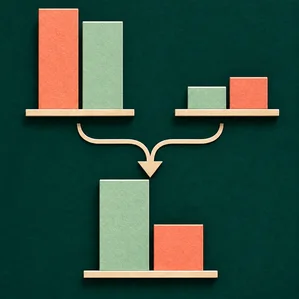
Infers a causal or across-group conclusion from a pooled or stratified association while overlooking a consequential reversal and the role of group co...

The premises support some conclusion, but the speaker draws or defends a different conclusion from the one at issue. The proof addresses the wrong que...

The argument treats actual truths as necessary truths merely because they are true, collapsing the distinction between what happens and what could not...

The argument moves a term such as necessarily or possibly across a conditional or quantifier. The necessity of an implication does not make its conseq...

A claim about what happens in the world is inferred from what would be fair, desirable, or morally acceptable. A moral ideal does not establish how pe...

Treats an earlier good deed or sacrifice as permission to violate a rule that still applies. The argument offers moral credit in place of a justificat...

When an ambitious claim is challenged, the speaker retreats to a weaker, easier-to-defend claim. After defending the weaker claim, the speaker treats...
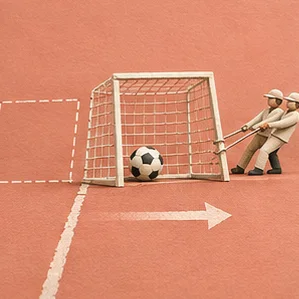
After the other party meets a previously agreed evidentiary standard, the speaker demands a new or stronger condition without a reason tied to the ori...

In Moore’s contested usage, assumes a descriptive property such as being pleasant supplies the very meaning of moral goodness, without defending that...

Misstates the negation of a quantified proposition, such as taking “not all” to mean “none” or “not every P is Q” to mean “every P is not Q”.

A categorical syllogism uses premises that only assert membership or overlap to conclude that one class is excluded from another. The premises leave o...

A feasible improvement is dismissed because it fails to achieve an ideal or perfect outcome. The argument treats an imperfect reduction in harm as wor...

Dismisses an idea because people would supposedly have discovered, adopted, or recorded it long ago if it had merit. The argument assumes that earlier...

The conclusion does not follow from the reasons offered. The speaker moves from a premise to a conclusion without supplying the connecting premise or...

A sweeping claim is rescued from a genuine counterexample by redefining membership after the fact. Someone who previously counted is declared not a re...

Selects unusually extreme people or statements from an opposing group and uses them as evidence of what the group as a whole believes. The selection m...

Rates a decision chiefly by the result that happened, giving too little weight to what was knowable, foreseeable, or controllable when the decision wa...

Treats one plausible explanation as established without comparing other credible explanations that fit the evidence about as well.

The argument reduces a complex issue to a formulation that discards distinctions or interacting factors essential to the conclusion. The omitted detai...

Uses a broad-sounding generalization whose qualifications remove enough cases to undermine the broad conclusion it is cited to support. The headline d...

Groups importantly different proposals or practices under one label, then makes acceptance or rejection of one stand in for acceptance or rejection of...

Redefines a familiar term so that it carries an approval or condemnation that the reasoning needs to earn. It then treats the judgment built into the...

The speaker discredits a person or source in advance so the audience will reject anything they might say. The attack bypasses evaluation of their actu...

Uses temporal succession as sufficient evidence that the earlier event caused the later one.

Gives an immediate benefit disproportionate weight relative to later benefits or costs, sometimes reversing a preference when an option becomes availa...

The speaker repeats a claim, states it with confidence, or calls it obvious in place of providing evidence for it. Repetition may increase familiarity...

Mistakes the probability of the evidence given one hypothesis for the probability of that hypothesis given the evidence, often when reasoning about in...

Offers a principle as sufficient to establish a conclusion even though the same principle licenses other clear conclusions the speaker rejects or cann...

The argument switches the order or scope of quantifiers. Everyone has someone they trust does not establish that there is one particular person whom e...

Uses an evaluative description that assumes the very judgment an argument is supposed to establish, then relies on that description to carry the concl...

The speaker diverts a discussion to an issue that does not resolve the claim under dispute. The new topic may be interesting or consequential on its o...

Takes the existence of a meaningful word, name, or expression to establish that it must refer to a real thing. Language can describe imaginary, hypoth...

Undermines an example offered in support of a claim and treats that as proof the larger claim is false, despite the example being illustrative or only...
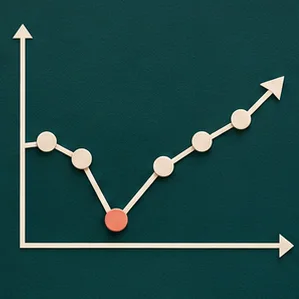
Attributes a less extreme later measurement to an intervention or cause without accounting for the tendency of unusually extreme, noisy measurements t...

An abstraction, category, or metaphor is treated as a concrete entity with independent powers, motives, or actions. Naming a pattern does not establis...

Treats an outcome as inevitable under the circumstances simply because it actually happened. Observing which possibility materialized does not establi...
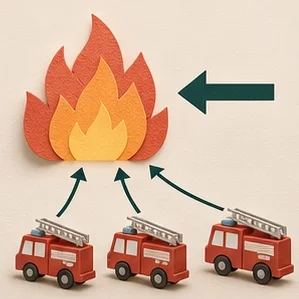
The speaker assumes the direction of influence runs from A to B when the observed relationship could arise because B influences A. The association doe...

Uses a reason that favors doing more of something to justify one particular stopping point. A tradeoff, constraint, or other stopping criterion is nee...

The argument evaluates similar outcomes as if their magnitude did not matter, reacting the same way to a small and a vastly larger impact without a re...

Insulates a claim against testing by counting outcomes that could expose it to error as compatible with it or as further confirmation under the speake...

Requires another person to refute a claim before its proponent will supply the support the proponent owes.

A complex outcome is attributed entirely to one factor even though several factors may contribute independently or interact. Showing that one cause ma...

Uses a predicted chain from a first step to a significant endpoint despite inadequate support for crucial links or the lack of a stopping point.

A general rule or standard is selectively relaxed for a favored case without a relevant justification. Similar cases are judged by different standards...

Gives extra weight to keeping the current arrangement because it is already in place, beyond relevant switching costs, risks, or benefits.

Materially misrepresents someone’s position and attacks that substitute as though it refuted what the person actually claims.

An option is continued because time, money, or effort has already been invested and cannot be recovered. That past cost does not establish that contin...

Measures a property against an extreme or specially chosen comparison so that an ordinary opposing description can never apply. The ranking relative t...

Leaves out a relevant fact or qualification that materially weakens the inference from the evidence offered.

The argument draws lessons from cases that remained visible, successful, or eligible while overlooking comparable failures or cases that dropped out....

The speaker looks through data for an impressive cluster or pattern, chooses categories or boundaries after seeing it, and then presents the finding a...

A stock phrase is used to shut down examination of a live question. A familiar saying substitutes for a reason when the conclusion is actually contest...

Uses one person’s approval, based on their membership in an affected group, to settle a disputed claim about that entire group or to dismiss documente...

Uses the emotional delivery of a claim to dismiss its truth or the merits of its evidence when the delivery has no relevant bearing on those merits.

Treats an incidental detail as sufficient to dismiss a proposal or argument without explaining how that detail undermines the main claim.

The speaker dismisses advice or criticism on the ground that the person offering it violates the same standard. Inconsistency in behavior does not set...

Conduct is presented as justified because another person committed a comparable wrong first. The earlier wrong alone does not establish that the respo...

Relies on an unstated premise that is necessary for the inference but lacks agreement or support in context. The passage sounds complete only if the r...

Two groups share a category or property, so the argument treats one group as belonging to the other. All poets and all sailors are people, but the com...

Projects a relationship into an unobserved time, scale, or operating range without grounds for assuming the relationship persists there.

The argument attacks a genuinely held but unusually weak version of a position and presents that defeat as a refutation of the stronger or more repres...

A criticism is evaded by directing attention to a different alleged wrongdoing. Another party’s conduct may also deserve scrutiny, but it does not res...

Treats the desirability of an outcome or hope that it occurs as evidence that the outcome is real, likely, or assured.

Uses a rate or pattern from a group that poorly represents the particular case, even though the case belongs to a more relevant comparison group for t...


