
Evidence and sampling

Anecdotal fallacy
Treats an isolated personal account as decisive evidence about a general or comparative claim despite better evidence being needed.
172 entries
Explore logical fallacies and cognitive biases. Search by name, alias, or a term from the definition.
24 results
Treats an isolated personal account as decisive evidence about a general or comparative claim despite better evidence being needed.

Uses a sample chosen in a way that systematically distorts what it shows about the target population.

Selects favorable findings, cases, periods, or measures while omitting relevant unfavorable evidence, then draws a conclusion the selective subset can...

Uses a change relative to baseline risk as if it were an equally large change in absolute probability or percentage points.

Treats a role’s most obvious task as its entire contribution. It predicts that replacing that task will preserve the value of the whole role without c...

Assumes that meeting the largest possible number of requirements for a best outcome will automatically produce the next-best outcome when an important...

The argument dismisses a problem or complaint solely because a worse problem exists. The relative severity of the other concern does not show that the...

Opposing positions are treated as equally well supported because each has an advocate, even though the quality or weight of the evidence differs mater...

Treats materially different cases, acts, or claims as equally significant or deserving equivalent treatment on the strength of an inadequate similarit...
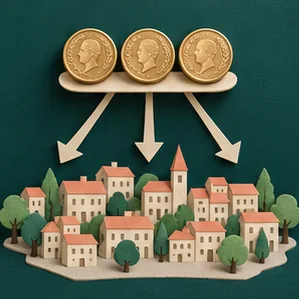
Extends observations to a much broader population, situation, or rule than the evidence warrants.

Uses disagreements within an area of inquiry to deny that investigators know anything useful about the issue, even where the disagreement concerns det...

Treats a convenient numerical measure as exhaustive evidence for a broader goal, discarding meaningful information that is harder to measure or failin...

The argument treats the midpoint or compromise between two positions as true simply because it lies between them. One position, or a third option outs...

A feasible improvement is dismissed because it fails to achieve an ideal or perfect outcome. The argument treats an imperfect reduction in harm as wor...

Selects unusually extreme people or statements from an opposing group and uses them as evidence of what the group as a whole believes. The selection m...

Uses a reason that favors doing more of something to justify one particular stopping point. A tradeoff, constraint, or other stopping criterion is nee...
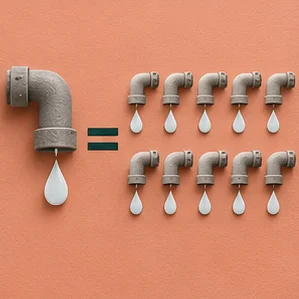
The argument evaluates similar outcomes as if their magnitude did not matter, reacting the same way to a small and a vastly larger impact without a re...

A general rule or standard is selectively relaxed for a favored case without a relevant justification. Similar cases are judged by different standards...

An option is continued because time, money, or effort has already been invested and cannot be recovered. That past cost does not establish that contin...

Leaves out a relevant fact or qualification that materially weakens the inference from the evidence offered.

The argument draws lessons from cases that remained visible, successful, or eligible while overlooking comparable failures or cases that dropped out....

The speaker looks through data for an impressive cluster or pattern, chooses categories or boundaries after seeing it, and then presents the finding a...

Projects a relationship into an unobserved time, scale, or operating range without grounds for assuming the relationship persists there.

Uses a rate or pattern from a group that poorly represents the particular case, even though the case belongs to a more relevant comparison group for t...


