
Deduction and scope

Ad hoc rescue
Adds an unsupported auxiliary claim or exception to save a position from contrary evidence.
172 entries
Explore logical fallacies and cognitive biases. Search by name, alias, or a term from the definition.
26 results
Adds an unsupported auxiliary claim or exception to save a position from contrary evidence.

A categorical syllogism tries to establish that two classes overlap or that one contains the other, although one premise excludes a class or part of a...

From P or Q and the truth of P, the argument concludes that Q is false. The conclusion requires an exclusive disjunction, while the premise permits bo...

If P is true, Q follows. Q is observed, so the argument concludes that P is true. Q may follow from other causes or conditions, so observing Q does no...

A definition explains a term using that same term or another term that ultimately depends on it. A reader who does not already know what the term mean...

Presents a premise or chain of supporting claims that already assumes the disputed conclusion in substance.
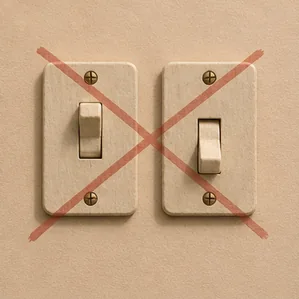
Uses premises that cannot all be true in the same sense, place, and time. With no possible case where the premises jointly hold, the argument cannot e...

From the fact that two propositions cannot both be true and that one is false, concludes that the other must be true. Both may be false.

If P is true, Q follows. P is false, so the argument concludes that Q is false. P may be sufficient for Q without being necessary, and Q can arise ano...
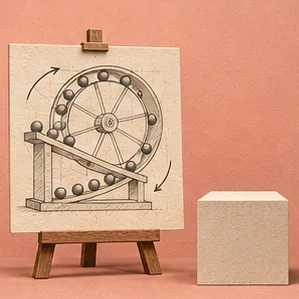
The argument infers that an instance of a category exists from a universal statement that can hold even if the category is empty. All unicorns have ho...

A categorical syllogism tries to derive a relationship between two classes from two negative premises. Knowing that each class is excluded from a thir...

Treats a limited set of alternatives as exhaustive despite a relevant possibility the reasoning leaves out.

Swaps the subject and predicate of a categorical statement and complements both terms in a case where that operation fails. In particular, an overlap...

The argument reverses a universal affirmative or a particular negative statement without justification. All A are B is taken to imply that all B are A...

A categorical syllogism makes a claim about the entire predicate class in its conclusion even though the premise containing that class did not cover a...

A categorical syllogism extends a claim to the entire subject class in the conclusion even though the premises establish it for only some or an unspec...

The argument treats actual truths as necessary truths merely because they are true, collapsing the distinction between what happens and what could not...

The argument moves a term such as necessarily or possibly across a conditional or quantifier. The necessity of an implication does not make its conseq...

Misstates the negation of a quantified proposition, such as taking “not all” to mean “none” or “not every P is Q” to mean “every P is not Q”.

A categorical syllogism uses premises that only assert membership or overlap to conclude that one class is excluded from another. The premises leave o...

The conclusion does not follow from the reasons offered. The speaker moves from a premise to a conclusion without supplying the connecting premise or...

Offers a principle as sufficient to establish a conclusion even though the same principle licenses other clear conclusions the speaker rejects or cann...

The argument switches the order or scope of quantifiers. Everyone has someone they trust does not establish that there is one particular person whom e...

Insulates a claim against testing by counting outcomes that could expose it to error as compatible with it or as further confirmation under the speake...

Relies on an unstated premise that is necessary for the inference but lacks agreement or support in context. The passage sounds complete only if the r...

Two groups share a category or property, so the argument treats one group as belonging to the other. All poets and all sailors are people, but the com...


