
Probability and statistics

Appeal to probability
An event’s possibility or nonzero chance is treated as enough to conclude that it will occur. A possible outcome still requires evidence about its lik...
172 entries
Explore logical fallacies and cognitive biases. Search by name, alias, or a term from the definition.
18 results
An event’s possibility or nonzero chance is treated as enough to conclude that it will occur. A possible outcome still requires evidence about its lik...

Treats observations or reports as independent corroboration even though they share a source, dependence, or common error that explains their agreement...

A pattern seen between individuals is assumed to hold between groups or populations. Group-level processes and aggregation can change or even reverse...
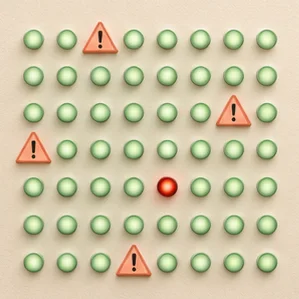
Disregards the relevant prior frequency of a condition when using case-specific evidence to estimate how likely the condition is.

Treats the ratio of successes to failures as the fraction of all outcomes that are successes, or substitutes a ratio of odds for a ratio of probabilit...

A detailed scenario where two events both occur is treated as more probable than one of those events alone. The overlap cannot be larger than either c...

Counts are compared without accounting for the different-sized populations, time periods, or opportunities from which they were drawn. More events can...
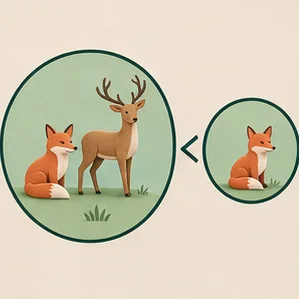
Ranks a disjunction of events as less probable than one of the events it includes, even though any outcome satisfying that event satisfies the disjunc...

Several observations are treated as independent confirmations even though they trace to the same source, copy one another, or count the same event mor...

A statistical relationship or average observed for groups is used to infer how the same variables relate for individuals in those groups. Aggregate da...

A number is reported with more digits or certainty than the measurements or method support. The apparent exactness invites confidence that the evidenc...

After a run of one outcome in independent random trials, the speaker assumes the opposite outcome is now due to restore balance. Previous outcomes do...

Treats a result found by searching many hypotheses or subgroups as if its chance-error rate came from one test specified before searching.

Repeatedly inspects accumulating data and stops when a desired threshold is crossed, then interprets the result using an analysis that assumes a fixed...

From observing one rare result, the argument infers that many unseen attempts must have taken place, even when the observed trial was not selected bec...

Treats a real situation as if its possible outcomes and odds were as completely known as the rules of a game. It then uses the model’s precision to di...
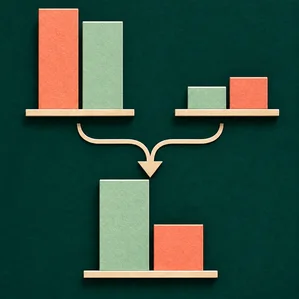
Infers a causal or across-group conclusion from a pooled or stratified association while overlooking a consequential reversal and the role of group co...

Mistakes the probability of the evidence given one hypothesis for the probability of that hypothesis given the evidence, often when reasoning about in...


